Introduction: Why This Matters To Ambitious SME Leaders
If you’re an ambitious SME leader in Africa or serving SMEs across the continent, you’re likely asking one question more often than you’d like: how do I grow my business without everything depending on me?
You know the feeling: decisions stuck in a spreadsheet, repetitive manual tasks eating your day, and silos between marketing, sales, finance, and operations. You want a future where your team takes ownership, where growth feels scalable, and where burnout isn’t the price of progress.
This pillar article provides details on how a Business Operating System (BOS) is not just a stack of tools, but a cohesive framework that links people, processes, data, and AI coaching into one unified system.
Welcome to a path that helps you grow with clarity, confidence, and sustainability.
What Is A Business Operating System (BOS)?
A Business Operating System is the blueprint for how your business runs. It’s not just software; it’s the architecture of your routines, decision rights, workflows, metrics, and roles; designed to deliver consistent outcomes every day.
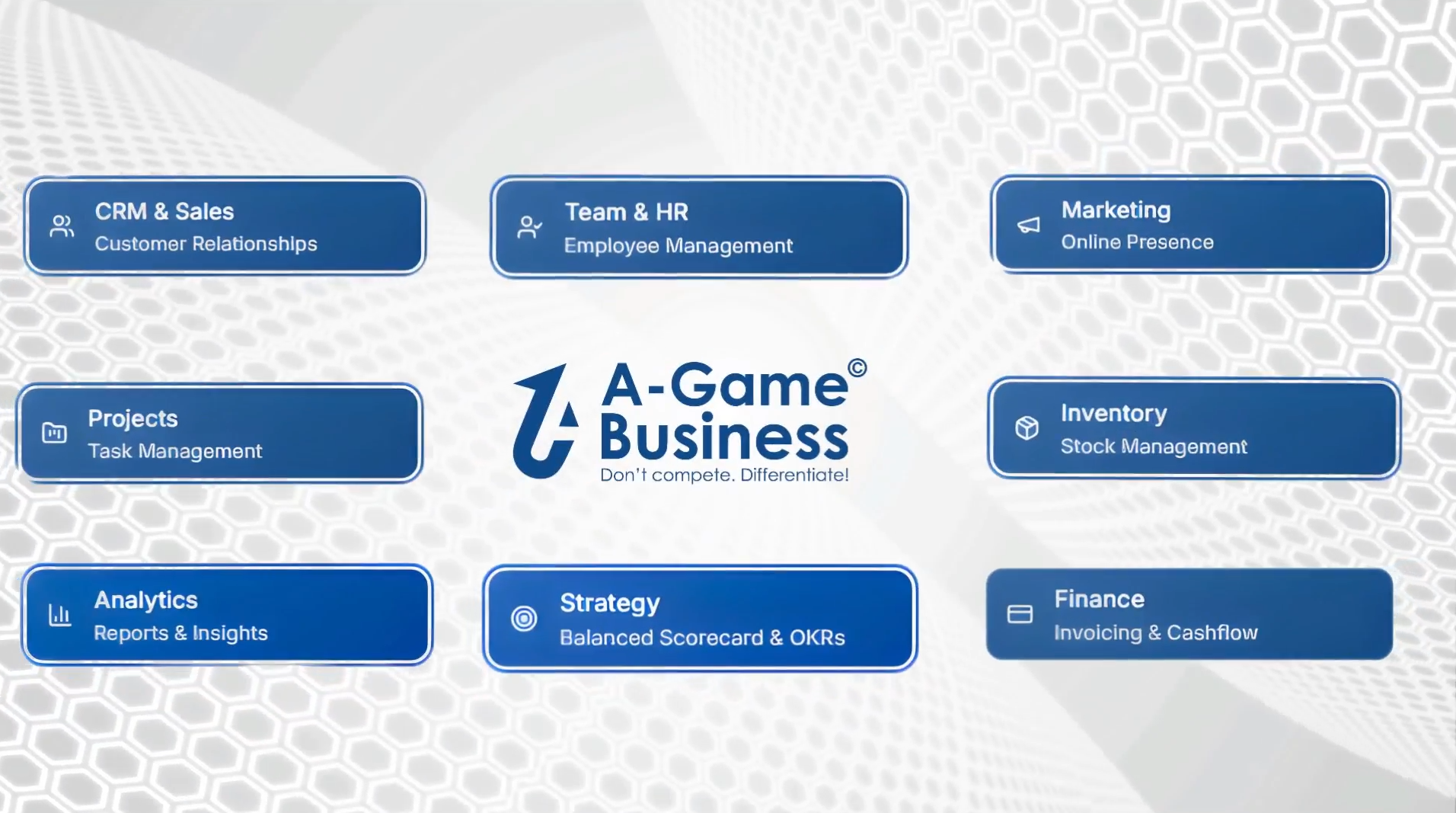
For SMEs, a BOS integrates strategy, marketing, sales, finance, HR, projects, and analytics into a single, auditable, repeatable system. It defines how work gets planned, approved, executed, reviewed, and improved. It also creates a foundation for AI-assisted coaching and automation so your team can do more with less friction.
If you’ve been wondering, “what is a Business Operating System?” think of it as the framework and the engine behind your playbook. It translates big-picture strategy into concrete daily actions, and it makes those actions observable, repeatable, and scalable.
Why A BOS Matters For Scale (And Burnout Prevention)
Sustainable growth happens when you can reliably reproduce success, not when you rely on heroic heroics from a few people. A BOS delivers:
- Alignment across teams: Everyone understands priorities, ownership, and how their work connects to revenue and customer value.
- Faster, smarter decision-making: Real-time visibility into cash flow, profitability, and performance metrics reduces guesswork.
- A self-managing organization: Clear processes and autonomous teams reduce dependency on one founder or leader, enabling growth without ownership bottlenecks.
- Consistency and quality: Standard operating procedures and workflows ensure consistent customer experiences, even as you scale.
- AI-assisted productivity: AI coaching and automation help teams work smarter, not harder, turning scattered tools into a unified workflow.
- Change readiness: A single system makes change management smoother, making adoption easier for staff and reducing resistance.
From Isolated To Integrated: What A BOS Delivers For SMEs
What makes a BOS powerful for SMEs is its breadth combined with its focus on practical execution. A BOS for SMEs provides:
- Strategy in action: A clear method to translate goals into quarterly plans, projects, and tasks with accountability baked in.
- Unified operations: A single source of truth for marketing, sales, finance, HR, and operations, so teams coordinate instead of colliding.
- Data-driven insights: Dashboards that show profitability, customer acquisition, cash flow, and project health in real time.
- AI coaching at scale: Personalized guidance, micro-learning, and decision support for leaders and front-line teams.
- Seamless integration: Works with your existing tools and workflows, not replacements that require a painful migration.
- Culture of ownership: Clear roles, documented processes, and transparent metrics that empower staff to own outcomes.
How a BOS Helps You Grow Without Burnout
Growth without burnout is possible when growth processes are codified, repeatable, and supported by AI. Here’s how a BOS achieves that:
- Systematizes the work you currently do manually: SOPs turn improvisation into reliable practice.
- Distributes decision-making power: With clear rules and data, teams can make decisions without always asking “the boss.”
- Frees up your time for high-leverage work: You shift from firefighting to coaching, strategy, and expansion planning.
- Improves cash flow visibility: Unified financial dashboards show where money is coming from and where it’s going, enabling smarter investment.
- Enables proactive risk management: Early-warning signals on delays, overruns, and customer churn help you course-correct sooner.
- Supports AI coaching for every role: AI nudges, recommendations, and check-ins keep teams aligned and learning.
A Step-By-Step Playbook: Building A BOS For SMEs
Below is a practical, action-oriented approach you can start using today. It’s designed to be realistic for SMEs in Africa, balancing ambition with practical constraints like budgets and change readiness.
1) Define Your Values, Vision, And Roadmap
- Clarify your business’s purpose, core offerings, and target customers.
- Translate strategy into a 12–18 month roadmap with clear milestones and accountable owners.
- Identify the metrics that truly matter for growth (revenue, gross margin, CAC, LTV, and customer retention).
2) Map Core Processes And Decision Rights
- Document end-to-end processes for marketing, sales, onboarding, project delivery, and post-sale support.
- Assign decision rights: who approves budgets, who signs off on campaigns, who manages resource allocation.
- Create lightweight SOPs that are easy to follow and update.
3) Choose A Unified Platform That Fits Your Workflows
- Pick a platform designed for SMEs that can unify strategy, marketing, sales, finance, HR, and projects, with AI coaching baked in.
- Ensure it can integrate with tools you already use and supports scalable automation.
- Prioritize a solution that is Africa-aware: local support, data considerations, and cost structures that fit growth stages.
4) Design Simple, Scalable Workflows
- Build repeatable workflows with clear inputs, owners, SLA/timeframes, and review points.
- Create dashboards that surface the right data to the right people at the right time.
- Automate repetitive tasks (data entry, reminders, report generation) to free up human capacity for strategic work.
5) Inject Ai Coaching And Continuous Learning
- Use AI coaching to guide decision-makers and teams on best practices, next steps, and performance improvement.
- Set up micro-learning prompts tied to roles and processes so the team learns while doing.
- Use AI to forecast workload, resource needs, and potential bottlenecks.
6) Enable Change Management And User Adoption
- Start with a concrete pilot in one function and scale gradually.
- Involve champions from each department early; provide clear training and ongoing support.
- Communicate wins and demonstrate measurable improvements to sustain momentum.
7) Measure, Adapt, Repeat
- Track a lean set of KPIs aligned to your goals.
- Hold regular business reviews to assess progress, refine plans, and celebrate wins.
- Iterate processes and dashboards as the business evolves.
A-Build: How To Apply This In The Africa SME Context
- Cost considerations: Look for scalable pricing aligned with growth stages, not a rigid upfront spend. Prioritize platforms that offer modular add-ons so you can expand as you scale.
- Local support and compliance: Favor providers with regional support and an understanding of local regulations, currencies, and payment methods.
- Change readiness: Many teams resist change. Build a simple, compelling narrative around improved daily life, better customer outcomes, and personal growth for staff.
- Data migration risk: Plan for a staged migration with data cleansing steps and a rollback strategy. Start with non-critical data to test workflows before moving mission-critical data.
What A BOS Means For Your Productivity, Your Profit, And Your People
- More customers, less chaos: A unified system surfaces pipeline health, enabling proactive sales and marketing actions that convert more quickly.
- Greater control over operations: Real-time visibility into cash flow, project progress, and resource utilization reduces last-minute scrambles.
- A self-managing business: Clear processes and delegated decision rights empower your team to own outcomes, reducing bottlenecks and dependence on a single leader.
- AI-enabled growth: AI coaching helps teams improve, adapt, and scale without needing to hire at every step.
Case Study (Hypothetical): How A Small Firm Growth Happens With A BOS
Imagine a mid-sized marketing agency in Lagos with 25 employees. They struggle with fragmented tools, duplicated data entry, and missed revenue targets. They implement a Business Operating System for SMEs that unifies strategy, marketing, sales, finance, HR, and projects, with AI coaching.
- Within 60 days, their project delivery becomes more predictable; timelines slide less, and client satisfaction rises.
- Marketing campaigns are tracked end-to-end, with a single source of truth for funnel metrics, reducing waste and improving CAC and LTV.
- The finance view reveals real-time cash flow, enabling smarter resource allocation and seasonality planning.
- Staff report less manual admin and more time for value-add work, reinforcing a self-managing culture.
- With AI coaching, managers receive guidance on leadership, decision-making, and performance improvement, accelerating learning across the team.
This is the kind of path that can help you answer “how do I grow my business” in a sustainable way, by enabling a self-managing business that scales with confidence.
Measuring Success: Key Metrics To Watch
- Revenue growth rate and gross margin
- Customer acquisition cost (CAC) and lifetime value (LTV)
- Cash conversion cycle and days sales outstanding
- Lead-to-opportunity conversion rate
- Project delivery cycle time and on-time completion rate
- Employee engagement, turnover, and adoption of standardized processes
Safety, Security, And Trust
- Data protection: Choose a BOS that prioritizes data security, encryption, access controls, and compliance with applicable regulations.
- Change safety: Roll out new processes with pilot programs and clear rollback plans if needed.
- Vendor risk: Evaluate the vendor’s track record, support structure, and regional expertise.
FAQ: Answers To Common Questions
- What is a BOS, and how is it different from an ERP or CRM?
A BOS is the operating framework that connects strategy to execution across the core functions of your business, whereas ERPs and CRMs are tools within that framework. A BOS structures processes, roles, and data first, then uses tools to enable them.
- How long does it take to implement a BOS?
Realistically, a phased rollout can begin delivering value in 6–12 weeks with a focused pilot, and full integration across functions may take 3–6 months depending on scope and readiness.
- Can a BOS fit a small business with a tight budget?
Yes. Start with a lean core that covers strategy, sales, and project management, then layer in AI coaching and additional modules as you grow.
- How does AI coaching work in practice?
AI coaching analyses patterns in decisions, outcomes, and workflows to offer actionable recommendations, nudges, and learning content tailored to roles and goals.
- Why now, especially for SMEs in Africa?
The business landscape is increasingly competitive. A BOS helps you stay ahead with faster decision-making, better collaboration, and scalable growth without over-reliance on a single leader.
Why A-Game Business App Is Your Partner In Building A BOS
- Africa-First and AI-powered: A-Game is designed to support SME teams across Africa, focusing on practical adoption, local realities, and cost-effective growth.
- Unified, holistic platform: It brings strategy, marketing, sales, finance, HR, and projects into one place, reducing tool sprawl and fragmentation.
- AI coaching and guidance: Beyond automation, you get strategic coaching that helps teams grow professionally while delivering better business results.
- Seamless integration with existing workflows: You don’t need to rip and replace; you can migrate gradually and preserve what already works.
- A pathway to a self-managing business: With clear processes, data-driven decisions, and empowered teams, you can scale without being held back by any one person.
Roadmap: Getting Started In The Next 90 Days
- 0–14 days: Define your top-line goals, map core processes, and select a BOS partner (consider Africa-first providers with strong local support).
- 15–45 days: Implement the core BOS modules (strategy, CRM/sales, marketing, and project management) with light customization; begin AI coaching for leaders.
- 46–90 days: Roll out HR and finance modules, refine dashboards, and start the change-management plan; run a pilot with one department and collect feedback.
- Post-90 days: Expand to full organization, optimize workflows based on data, and establish a regular business review cycle.
Conclusion: Your Path To A Growing, Self-Managing Business
If you’ve wondered how to grow your business without everything depending on you, a Business Operating System for SMEs offers a practical, proven path. It turns strategy into action, aligns teams, and unlocks scalable growth while reducing burnout. The result is a self-managing business that can seize opportunities, respond to market changes, and sustain success over time.
A-Game Business App stands ready to be your partner on this journey. As Africa-first, AI-powered, unified platform, we help SME owners and their teams get more customers, gain control of operations, manage strategy, marketing, sales, finance, HR, projects, and receive AI coaching; all in one place.
Remember: growth is possible without burnout when you deploy a self-managing, AI-assisted operating system that ties strategy to execution. With A-Game Business, you’re not just adopting technology, you’re building a stronger, more resilient business that can scale with confidence.
If you’re ready to shift from fragmented tools and manual tasks to a bold, clear, and optimistic growth trajectory, start exploring how a BOS can transform your business today. Click here to start for free

0 Comments